Description
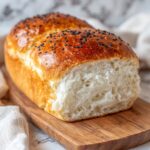
This Easy Homemade Bread recipe is perfect for beginners looking to bake fresh, soft bread at home. Featuring a simple method with basic ingredients like yeast, flour, and salt, the bread develops a crisp golden crust and a tender crumb. Ideal for sandwiches or to accompany any meal, this recipe guides you through each step from activating yeast to the final bake.
Ingredients
Scale
Yeast Mixture
- 1 packet (10g) dry yeast
- 1 cup (200ml) warm water
Dough
- 6 cups (720g) all-purpose flour, plus 1 cup (120g) for starter dough
- 1 teaspoon (10g) salt
Glaze
- 1 egg yolk
- 1 tablespoon milk
Instructions
- Activate the yeast: In a small bowl, combine the warm water and dry yeast. Stir gently until the yeast dissolves. Let it sit for about 15 minutes until the mixture becomes foamy, indicating the yeast is active.
- Make a starter dough: Add 1 cup of flour to the foamy yeast mixture. Stir well to combine, cover the bowl, and let it rest for 15 minutes to begin fermentation.
- Knead the dough: To the starter dough, add the remaining 6 cups of flour and salt. Knead the mixture for 3-4 minutes until the dough is soft, elastic, and slightly tacky but not sticky.
- First rise: Place the kneaded dough into a greased bowl, cover it with a clean cloth or plastic wrap, and let it rise in a warm, draft-free place for about 1 hour or until it doubles in size.
- Shape and second rise: Punch down the risen dough to release the gas. Divide it evenly into two portions, shape each into a loaf, and place them on a greased baking sheet. Cover and allow them to rise again for 20 minutes.
- Bake the bread: Preheat your oven to 400°F (200°C). Brush the tops of the loaves with a mixture of egg yolk and milk to give a shiny golden crust. Bake for 25-30 minutes until the loaves turn golden brown and sound hollow when tapped on the bottom.
- Cool and serve: Remove the bread from the oven and let it cool slightly on a wire rack before slicing. Enjoy your fresh homemade bread warm or at room temperature.
Notes
- Use warm water, not hot, to activate yeast properly without killing it—around 110°F (43°C) is ideal.
- Ensure the dough is kneaded enough to develop gluten, which gives the bread structure and chewiness.
- For a softer crust, brush the bread with butter right after baking.
- You can substitute all-purpose flour with bread flour for a chewier texture.
- Store leftover bread wrapped tightly in plastic or an airtight container to keep freshness.